BDSM | An accessible world of pleasure for Disabled People
Sexuality and sensuality are fundamental aspects of the human experience, yet for Disabled People, society often pushes an ableist narrative of desexualisation. And if you’re also into BDSM, your desires are considered weird at best and, at worst, pathologised and punished.
So when these identities intersect, finding a safe space to explore intimacy can feel like navigating an obstacle course.
The social model of disability, however, flips the script on how we view disability.
While the medical model views disability as an individual ‘problem’ or ‘defect’ that needs to be cured or fixed, the social model states that people are disabled by barriers in society, not by their bodies or impairments. For example, a person who uses a wheelchair isn’t inherently disabled by their inability to walk; they are disabled by a building that only has stairs.
Applying the social model of disability to sex and erotic pursuits can transform our understanding of pleasure and accessibility.
Redefining the ‘problem’
Under a medical model, if someone experiences chronic fatigue, limited mobility, or pain during standard sexual intercourse, for example, their bodies are labelled as dysfunctional.
The social model reveals a different truth: The person is disabled by a narrow, ableist definition of what sex ‘must’ look like.
As a sex-positive, kink- and disability-affirming Psychosexual Therapist, I help Disabled People challenge and (hopefully) throw out the linear ‘penetration-focused’ blueprint they’ve been sold. Instead, what I seek to do is dismantle the societal barrier of ableist sexual standards, freeing them to access pleasure on their own terms.
BDSM as a world of radical accessibility for Disabled People
Psychosexual therapists like me won’t treat an impairment as a problem to be ‘fixed’. Instead, we work with you to explore how your body experiences pleasure right now, mapping out new landscapes of intimacy that honour your energy levels, pain thresholds, and mobility.
Because BDSM requires explicit negotiation, boundary setting, and intentional scene-building, it acts as a highly accessible environment for Disabled People.
Why BDSM and disability are a good fit
While the mainstream world might view BDSM as extreme, some Disabled Folk have long understood that BDSM is inherently adaptive. In fact, the core principles of BDSM are exactly what make it beautiful for them:
- Radical communication: BDSM relies on explicit, ongoing consent and negotiation. You state your boundaries, your hard limits, and your desires upfront. This takes the guesswork out of intimacy.
- The power of control (and letting it go): When navigating a world not built for you, or living with a condition that feels unpredictable, engaging in a scene where you have absolute control over the power dynamics—or where you intentionally surrender control in a safe space—can be incredibly cathartic.
- Sensory exploration: Kink expands the vocabulary of touch. If certain types of traditional touch are painful or inaccessible, BDSM introduces alternative sensory experiences—temperature play, impact, restraint, or psychological thrills—that can bypass physical limitations and unlock profound pleasure.Traditional ableist intimacySocial model / BDSM-affirming intimacyRelies on unspoken assumptions about physical capability.Relies on proactive negotiation of physical needs and limits before anything begins.Expects bodies to spontaneously adapt to a rigid script.Designs the script entirely around what people can and want to do.Views adaptive gear (pillows, restraints, wedges) as ‘medical aides’ that kill the mood.Embraces adaptive gear as erotic tools that unlock new possibilities for pleasure.
In BDSM, discussing a physical limitation isn’t an awkward mood-killer; it’s a foundational part of the creative, consensual process. The environment adapts to the person, which is the core goal of the social model.
Shifting the therapist’s role
In a more clinical psychosexual therapy setting, the therapist is usually positioned as the ‘expert’ trying to return the patient to a baseline of ‘normal’ functioning.
However, when a Psychosexual Therapist adopts the social model of disability:
- They recognise that systemic ableism, lack of representation, and lack of accessible sex education are the true causes of a Disabled Person’s sexual frustration or isolation.
- They become a collaborative partner in removing barriers. Together, you aren’t fixing a medical pathology; you are navigating a world that has failed to accommodate diverse bodies and minds, reclaiming your right to autonomy and erotic joy despite societal failures.
You’re not a problem to be solved.
The social model reminds us that the only thing that needs correcting is a society that forgets pleasure belongs to everyone.
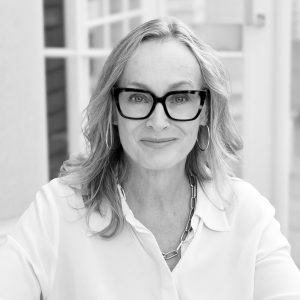
This article was written by Di Hassall, our Founder and Director of Therapy.
Di is an inclusive therapist who lives and breathes this work (personally and professionally). She works with all genders, sexualities, erotic desires and practices. With individuals and those in intimate relationships, including couples, polycules, and all shapes and sizes of multi-partner relationships.
She is also an Intimacy Coach, guiding individuals and partners to explore, discover and create passionate and playful erotic and sexual lives, often beyond traditional ideas of sex and intimacy.
Online sessions with Di start at £100 for individuals and £140 for relationship therapy